
Understanding the Nuances of Uganda’s Relations with Iran
A reflection on the complexities of Uganda's diplomatic postures, especially in relation to Iran
Hero image carried from the source feed. Verify imagery and captioning at Uganda Observer (UG).
The readable version, with the source trail intact.
This page turns the linked publisher report into a plain-English briefing, while keeping the original article and image trail easy to check.
The useful update
- Victor Okoth provided critical feedback on the author's writings regarding Uganda's foreign relations
- The author acknowledges a divergence in the treatment of Uganda and Iran in their writing
The stakes
- Exploring the contradictions in Uganda's foreign policy offers insights into the broader geopolitical landscape
- Understanding these nuances may influence public opinion and policy discussions as Uganda celebrates decades under Museveni's leadership
The next check
- Yoweri Museveni has been a prominent figure in Ugandan politics for nearly 40 years
- Iran's approach to governance has parallels to Uganda’s, particularly regarding human rights issues
Where this came from
-
01
Original report Correspondences on Iran and Uganda
Publisher: Uganda Observer (UG) · Published May 6, 3:46 am · observer.ug
Open original -
02
TortoisePath layer TortoisePath Story Breakdown
Summary generated 4 months ago from the original report.
-
03
Visual trail 4 attributed source images
Image cards below keep the publisher attribution and link back to the original article.
Jump to images
The short version
Uganda President Museveni meeting Iranian Ambassador Majid Saffar in Kyankwanzi last month Dear reader, a wonderful Ugandan, Victor Okoth – a PhD student at Northwestern University in the US – sha…
Dear reader, a wonderful Ugandan, Victor Okoth – a PhD student at Northwestern University in the US – shared some friendly fire on what appears like contradictions in my writing. I am forever grateful to all the feedback, and Victor precisely touches a core aspect that I fel…
I am forever grateful to all the feedback, and Victor precisely touches a core aspect that I felt needed more engagement as we move into 40-years of Yoweri Museveni – a man, who supposedly claims to espouse an anti-colonial posture despite his rabid embrace of the new colonise…
What happened
- Victor Okoth provided critical feedback on the author's writings regarding Uganda's foreign relations
- The author acknowledges a divergence in the treatment of Uganda and Iran in their writing
- Discussion centers on Museveni's dual stance of anti-colonialism versus collaboration with institutions like the IMF and World Bank
- The conversation highlights the need for public engagement on these complex topics
Why this matters
- Exploring the contradictions in Uganda's foreign policy offers insights into the broader geopolitical landscape
- Understanding these nuances may influence public opinion and policy discussions as Uganda celebrates decades under Museveni's leadership
- The debate can help clarify the motivations and consequences of Uganda's international relations
Open these next
Images published alongside the source story
Each image keeps its publisher, caption or article title, citation text, and a direct path back to the original article for verification.
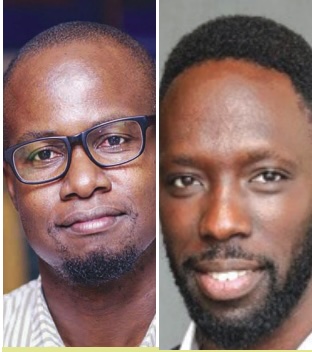
Image from The Observer via the original article.

Original articleCorrespondences on Iran and Uganda - The Observer
Image from The Observer via the original article.

Original articleCorrespondences on Iran and Uganda - The Observer
Image from The Observer via the original article.

Original articleCorrespondences on Iran and Uganda - The Observer
Image from The Observer via the original article.